
Modern Romanticism 101 – A Guide

Here, we introduce Modern Romanticism in storytelling, a movement we’ve defined for imaginative stories in the contemporary world.
A BRIEF SUMMARY OF MODERN ROMANTICISM (FOR THOSE WHO WANT TO SKIP THE FULL GUIDE)
Further down, we have a detailed guide to Modern Romanticism, but if you’re looking for a shorter explanation, we have a quick summary right here.
We define Modern Romanticism as a storytelling movement (from 1900 to today) deeply influenced by the Medieval and Romantic Eras. In this movement, you’ll find stories of the imagination: fantasy, the supernatural, gothic romance, fairy tales, folklore, and spirituality. It also encompasses romanticized period dramas, stories celebrating nature and the stars, and works that strongly emphasize individuality, nostalgia, idealism, emotion, elevated language, or freedom.
Crucially, stories of Romanticism do not require a romantic love story. Instead, the term refers to the style and philosophy of Romanticism as applied to modern narratives. While many of our favorite stories feature beautiful romances, Modern Romanticism is defined by an imaginative, idealized worldview that prioritizes the human spirit and hope over gritty realism.
In short, Modern Romanticism is a movement we’ve defined that emphasizes stories influenced by the artistic and literary traditions of the 18th and 19th centuries, reimagined for the contemporary world.
THE FULL MODERN ROMANTICISM 101 GUIDE STARTS HERE
Below, we include a detailed checklist and guide for Modern Romanticism in entertainment. As well as a checklist of what Modern Romanticism isn’t. Beyond that, we have some examples to get you started in Modern Romanticism.
WHAT IS ROMANTICISM, MEDIEVAL ROMANTICISM & MODERN ROMANTICISM?
Before proceeding to the checklist, we must first define Romanticism and Medieval Romanticism and distinguish between Romantic and romantic.
ROMANTICISM
Romantic, with a capital R, means something very different from romantic or romance. Romantic with a capital R refers to the Romantic Period – better known as Romanticism (which also differs from romanticism).
You may wonder: what is the actual difference between Romanticism and romanticism, or Romantic and romantic? To understand Modern Romanticism, we must first look at these terms through a literary lens.
Let’s explore.
According to the English Oxford Dictionary:
- romanticism: The state or quality of being romantic.
- Romanticism: A movement in the arts and literature which originated in the late 18th century, emphasizing inspiration, subjectivity, and the primacy of the individual.
Now, let’s look at romantic vs. Romantic. According to the English Oxford Dictionary:
- romantic:
- 1.1 (of a person) readily demonstrating feelings of love. ‘
- he’s very handsome, and so romantic’
- 1.2 Relating to love or to sexual relationships.
- ‘romantic fiction’
- 2.0 Of, characterized by, or suggestive of an idealized view of reality.
- ‘a romantic attitude toward the past’
- 1.1 (of a person) readily demonstrating feelings of love. ‘
- Romantic: Relating to or denoting the artistic and literary movement of Romanticism.
- ‘the Romantic tradition’
When we refer to Romantic or Romanticism, we are discussing the artistic movement and the philosophy of the Romantics. It is not required that these stories be “romances” in the modern sense (focusing on kisses and flowers). Instead, we are looking for specific qualities of the Romantic tradition.
However, Romanticism as a movement can be broad! The list below includes only some characteristics, but it provides a good overview. You can read more about the historical movement HERE.
I’ve included a few distinct traits of Romanticism that also pertain (in part) to our definition of Modern Romanticism:
- Emphasis on emotion, feelings, and intuition.
- Passion and intense personal expression: Artists expressing their deepest beliefs.
- The Sublime: A sense of awe and greatness beyond human measurement.
- Focus on individualism and non-conformity (e.g., Jane Eyre).
- Love of nature, beauty, travel, adventure, and the stars.
- Appreciation for childhood and innocence.
- Interest in the “Common Man,” equality, and personal freedom (e.g., Transcendentalism).
- The importance of imagination and creativity: Elevating the imaginative above “gritty realism.”
- Glorification of the past: An interest in history and the idealization of rural life.
- Nostalgia.
- Optimism and idealism: A focus on innate goodness.
- Spirituality and mysticism: Writing that includes elements of the Divine or the transcendental (e.g., Emerson, Thoreau).
- The Fantastical or Supernatural: Stories that embrace the “other” (e.g., Frankenstein).
- Mythological and Folklore influence: Themes drawn from fairy tales and myth.
- Free Will and Potentiality: Stories about the power of choice and its consequences.
WHAT IS MEDIEVAL ROMANTICISM?
The Middle Ages influenced the Romantic Age of the 18th and 19th centuries. In The Cambridge Companion to Medievalism, Clare A. Simmons writes:
“The term ‘Romantic Era’ suggests an age influenced by the larger-than-life world of medieval romance, stories of great adventures, supernatural intervention, and powerful emotions. Before 1820, European writers had begun to use the word ‘romantic’ to describe something prompting an emotional response similar to romance.”
There is no better way to describe it! Medieval Romanticism (or Romantic Medievalism) refers to the elements of the Middle Ages, chivalry, adventure, and the supernatural that directly influenced the Romantic Era and continue to inspire Modern Romanticism today.
What is the difference between (Classic) Romanticism and Modern Romanticism?
Romanticism Example: Grimm’s Fairy Tales
Modern Romanticism Example: Cinderella (2015) – A Disney live-action retelling.
Romanticism Example: Jane Eyre by Charlotte Brontë
Modern Romanticism Examples: Twilight by Stephenie Meyer, Doctor Who, or the Jane Eyre (2006) TV adaptation.
The difference is that Modern Romanticism is not “technically” part of the historical movement, but rather modern stories that are influenced by it.
What is Modern Romanticism as defined by The Silver Petticoat Review?
While the historical Romantic movement is broad, we define Modern Romanticism as storytelling from 1900 to the present that is steeped in the imaginative, fantastical, individualistic, and nostalgic elements of the original movement.
In short, it is a movement emphasizing stories influenced by Medieval Romanticism and the Romantic Era (the artistic and literary movement) of the 18th and 19th centuries, reimagined for the contemporary world.
That’s our definition, and we’re running with it!
We categorize all stories from the pre-Romantic Period through 1899, including Shakespeare, the early Gothic novel, and folklore, as Romanticism. Any stories published or filmed from 1900 to the present day with a heavy Romantic influence are considered Modern Romanticism.
To summarize, Modern Romanticism includes stories influenced by the movement from 1900 to the present. In contrast, Romanticism encompasses works from the pre-Romantic Era through the historical movement itself, up to 1899.
At The Silver Petticoat Review, we discuss both old-fashioned romance (lowercase ‘r’) and Romance (with a capital ‘R’). We are the site of romance and Romance!
Modern Romanticism Checklist (Silver Petticoat Style):

A story does not have to include every one of these elements to be considered Modern Romanticism, but it should consist of some of them. We’re looking for an “overall” feel.
- Rooted in Tradition: Heavily influenced by the ideals of Romanticism and Medieval Romanticism.
- Emphasis on Emotion and Intuition: Showcases authentic, powerful emotions – passion, dreams, and personal expression. A good story can make you feel happiness, loneliness, hope, and more. As we like to say, Romanticism is all about feeling.
- Love of Nature and Beauty: An appreciation for art, travel, nature, and the stars (e.g., L.M. Montgomery’s novels or Tolkien’s The Lord of the Rings).
- The Importance of Imagination: Elevates creativity and imagination above “gritty realism.”
- Glorification of the Past and Rural Life: Includes an interest in history, nostalgia, and the idealization of simpler times (e.g., romanticized period dramas or small-town stories).
- Spiritual and Mystical Elements: May include elements of the Divine, faith, or inspiration.
- The Fantastic or Supernatural: Often includes magical or otherworldly elements.
- Romantic Realism and Naturalism: While we move away from “gritty” realism, we embrace stories with “real” problems told in an imaginative, elevated, or emotional way (e.g., Jane Austen’s novels or This Is Us).
- The Beauty of Language: Explores poetic, elevated language and witty dialogue (think Gilmore Girls, Nora Ephron rom-coms, Anne of Green Gables, or The Hours).
- Traditional Storytelling and Archetypes: Utilizes effective storytelling techniques influenced by fairy tales, folklore, classics, and mythology.
- Sophisticated Humor: Uses wit, satire, or intelligent comedy rather than vulgarity or crudeness.
- Thematic Character Depth: Focuses on three-dimensional characters with clear thematic purposes (e.g., Lost).
- Optimism over Positivity: Maintains a non-cynical approach with touches of idealism. We believe optimistic stories can be dark, provided they focus on the “light at the end of the tunnel” rather than pure darkness.
- Justice and Triumph: Good often triumphs over evil in the end.
- The Sublime: Features elements of sublimity, experiences that enchant and transcend reality.
- Emotional Resolution: Embraces a Happily Ever After (HEA) when appropriate, but also values tragedy and drama when told through a Romantic lens.
- Focus on the Human Condition: Like the classics (Jane Eyre, Pride and Prejudice), the story must have something to say about humanity and contain an element of truth. If a story doesn’t resonate, what’s the point?
- Cerebral Romance: When romance is present, it is based on emotional and soulful connections rather than mere lust.
- Adventure and Chivalry: May include elements of classic heroism, adventure, and chivalrous ideals.
- The Romantic Hero: Often features a Byronic or Romantic Hero.
- Inherent Worth and Equality: Embraces diverse storytelling from around the world, recognizing that every individual has worth and every culture has stories worth sharing.
COMMON GENRES FOUND IN MODERN ROMANTICISM
The Imaginative & Fantastic
- Fantasy: Including Gaslamp, Contemporary, High Fantasy, Romantic Fantasy, and Urban Fantasy.
- Fairy Tales, Folklore, and Mythology
- Paranormal and Supernatural
- Science Fiction and Dystopian
- Horror and Gothic Horror
- Adventure, Superhero, and Disaster Tales
The Historical & Classic
- Historical Fiction and Romantic Period Dramas
- Austenesque (Stories inspired by the works of Jane Austen)
- Classics
- Coming of Age / Bildungsroman
- Poetry
Romance & Relationship-Driven Stories
- Romance: Including Historical, Paranormal, Rom-Com, Romantic Mystery, Romantic Suspense, Sweet/Closed Door, and Romantic Drama.
- Gothic Romance
- Women’s Fiction and Book Club Books
- Melodramas and Musicals
Mystery & Contemporary Drama
- Cozy Mystery
- Small-Town Dramas and Fiction
- Inspirational Fiction
- Comedy of Errors and Satire
What Modern Romanticism (Silver Petticoat Style) Isn’t
To further define the movement, it is helpful to look at what falls outside the boundaries of Modern Romanticism:
- Stories Lacking Romanticism Elements: While a story may be excellent, if it lacks the specific DNA of Romanticism, it does not fit this movement. Examples include gritty crime novels, mafia stories, true crime documentaries, and contemporary realism.
- Seedy, Vulgar, or Misogynistic Content: Stories that prioritize crudeness or the exploitation of others are the antithesis of the Romantic ideal.
- Antagonistic Storytelling: This includes narratives that take a hostile or mocking attitude toward romance, hope, and the human spirit.
- Overt Cynicism: We distinguish between a cynical character (who may have a thematic purpose) and a cynical storyteller. Modern Romanticism rejects a worldview that views life as inherently meaningless or devoid of light.
- Lacking Human Connection and Truth: Stories that feel emotionally inauthentic or “hollow” don’t fit with the Romantic tradition.
- Stereotypical Portrayals: We look for three-dimensional characterization. Portraying people as flat stereotypes shows a lack of empathy and artistic depth.
- Exploitative Content: This refers to stories that aim to titillate or shock the audience for the sake of the “shock factor” rather than serving a greater narrative or thematic purpose.
- Thoughtless Subversion: While we celebrate breaking rules and innovative genre mash-ups, we find that subverting a genre solely for the sake of being “original” or “trendy” often undermines good storytelling.
A Note on Creative Subversion
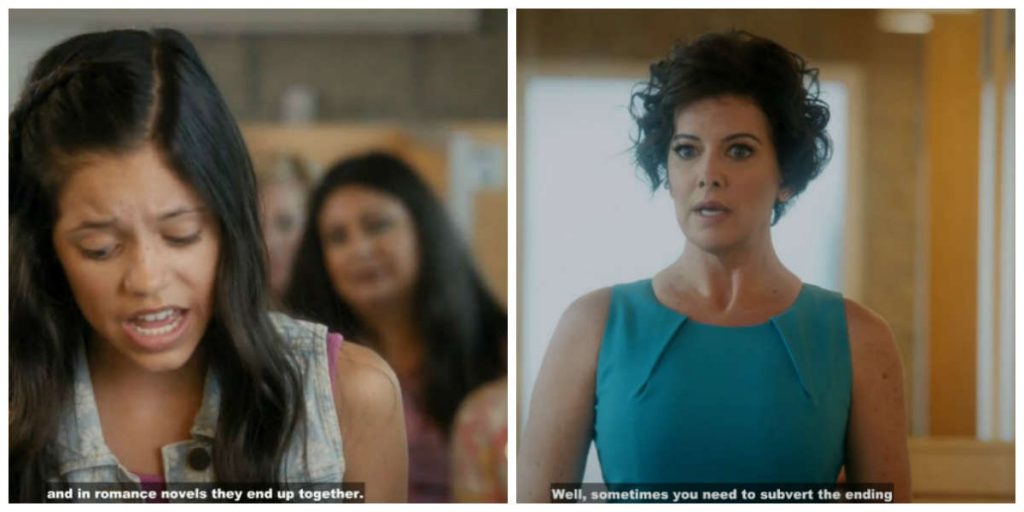
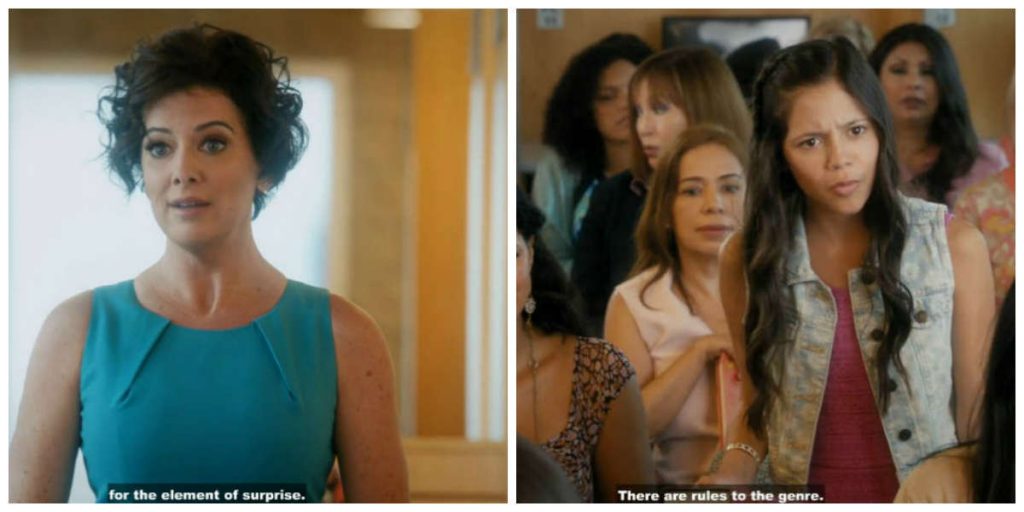
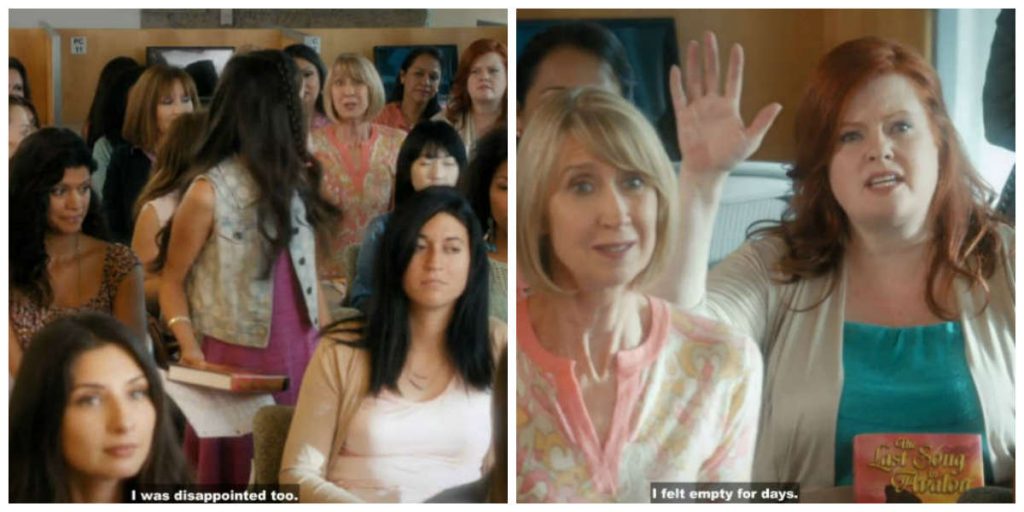
Romanticism is steeped in innovative creativity. We embrace “breaking the rules” and genre mash-ups when they serve the story. However, we believe there is a fundamental difference between creative innovation and the cynical dismantling of archetypal truths.
For example, adapting the Beauty and the Beast fairy tale into a story in which the characters do not end up together often undermines the tale’s archetypal meaning: transformation. When a storyteller subverts a genre they clearly dislike or do not understand, the result is often a story that lacks resonance.

Genre Integrity
Storytellers should have an intentional relationship with their chosen genre. While not every romance requires a “Happily Ever After,” certain genres, like the Romantic Comedy, carry an expectation of a happy ending. While rule-breaking is welcome, we believe it should be done carefully and with an understanding of the emotional truth the audience is seeking. So, subversion can work, mash-ups and originality are fantastic, but storytellers should know what type of story they’re telling.
Additional Thoughts On Modern Romanticism
The Optimistic Tone
Modern Romanticism (Silver Petticoat style) is defined by a fundamentally optimistic tone. Even in the saddest or loneliest stories, there should be a glimmer of hope or a meaningful message about the power of a character’s choices. While we embrace “light” stories, the ability to bring out powerful, authentic emotions is essential.
In a well-crafted tragedy, the darkness serves a purpose. Such stories raise important questions about the human condition and possess significant artistic merit. However, we believe a Romantic tragedy should never rely on excessive or exploitative content without a purpose.
Modern Romanticism is about emotion, imagination, adventure, and hope. We believe that when a reader or viewer finishes a story, they should feel moved or inspired, not left with a feeling of grim despair. Our philosophy is rooted in a belief in humanity’s innate goodness, and we actively seek out stories that celebrate that light.
Dark Romanticism
Our focus on optimism does not mean we don’t embrace “dark” stories. On the contrary, Modern Romanticism embraces a wide variety of genres, tones, and stories. Gothic fiction, for example, is heavily influenced by Romanticism and is often quite brooding; this is popularly known as “Dark Romanticism,” a style we deeply admire, love, and embrace. Consider Edgar Allan Poe’s stories as an example.
Modern Romanticism (Silver Petticoat style) focuses on how a story is told. Some of the most emotionally moving tales explore dark or violent themes, provided they serve a clear purpose. That intentionality is what distinguishes a Romantic work from one that is merely dark or grim.
We embrace all kinds of characters, including dark or morally complex figures from numerous backgrounds and beliefs. However, we believe the best examples of Modern Romanticism do not promote racism, bigotry, or abuse. When such issues arise within a story, they are presented as flaws to be explored or overcome, rather than as values to be celebrated. There is a fundamental difference between nuanced, good storytelling featuring flawed characters and propaganda that serves harmful ideologies.
We believe in the transcendental power of stories and embrace the themes of transformation and redemption. We also remain mindful of cultural perspectives, ensuring our understanding of Romanticism remains inclusive and broad.
The Importance of Imagination
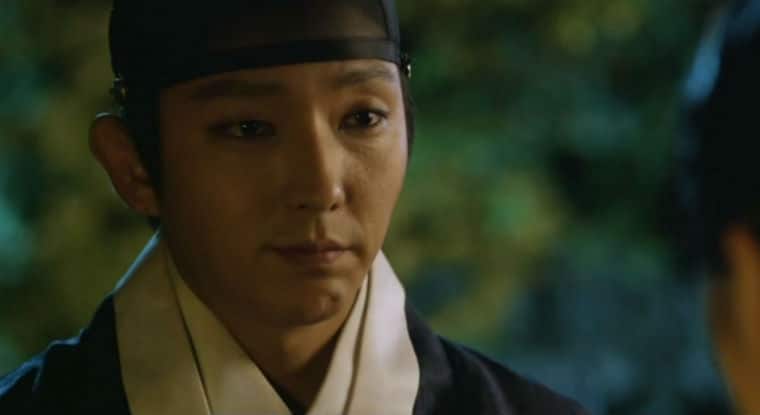
“Imagination cannot change reality, but it can change people, and those people can change the world.”
Kim Sung-yeol, Scholar Who Walks the Night
Fairy tales, happy endings, and stories infused with hope and imagination are often ridiculed in today’s cynical world. Our culture frequently equates “art” with gruesome content, nihilistic resolutions, and emotionally distant characters, as if the deeper we sink into the darker parts of the human experience, the more “artistic” the work becomes.
However, many people long for old-fashioned romance and Modern Romanticism to be more prevalent in entertainment. At The Silver Petticoat Review, we don’t just enjoy these stories; we embrace, analyze, and promote them as an alternative to modern cynicism.
On a happy note, many fantastic stories are out there, just ready to be watched or read.
We believe that even if “unrealistic,” a great story has the power to change us, inspire us, and make a difference in the world. We celebrate the transformative power of imagination and creativity, the very soul of Modern Romanticism.
A FEW EXAMPLES OF MODERN ROMANTICISM IN FILM, LITERATURE, & TV
While the following list is by no means comprehensive, these examples illustrate the extent of the movement:

Literature
- A Discovery of Witches by Deborah Harkness
- Beauty in Thorns by Kate Forsyth
- Daughter of the Forest by Juliet Marillier
- Harry Potter series by J.K. Rowling
- Possession by A.S. Byatt
- The Book Thief by Markus Zusak
- Twilight by Stephenie Meyer
- Hamnet by Maggie O’Farrell
- The Chronicles of Narnia by C.S. Lewis
Film & Television
- Period Dramas: Downton Abbey, Poldark, Lark Rise to Candleford, Monarch of the Glen, The Indian Doctor, Road to Avonlea, Anne of Green Gables, and various adaptations of Jane Eyre, Wuthering Heights, and Pride and Prejudice.
- Fantasy & Fairy Tales: Crouching Tiger Hidden Dragon, Ever After, Stardust, Edward Scissorhands, Merlin, The Originals, The Scholar Who Walks the Night, and Scarlet Heart: Ryeo.
- Speculative & Science Fiction: Doctor Who, The Sarah Jane Adventures, Interstellar, Star Trek, Star Wars, The X-Files, Stranger Things, and Lost.
- Romantic Drama & Comedy: Gilmore Girls, This Is Us, Meet Joe Black, Finding Neverland, Life is Beautiful, Dare to Be Wild, and Wild Mountain Thyme.
- Modern Classics & Epic Tales: The Lord of the Rings Trilogy, Around the World in 80 Days (2021), Good Omens, The Chosen, and The Hours.
This guide was created and is maintained by Amber & Autumn Topping, founders of The Silver Petticoat Review.
For more about what we cover, see our About Us, Romantic Living 101, and Old-Fashioned Romance 101 guides.